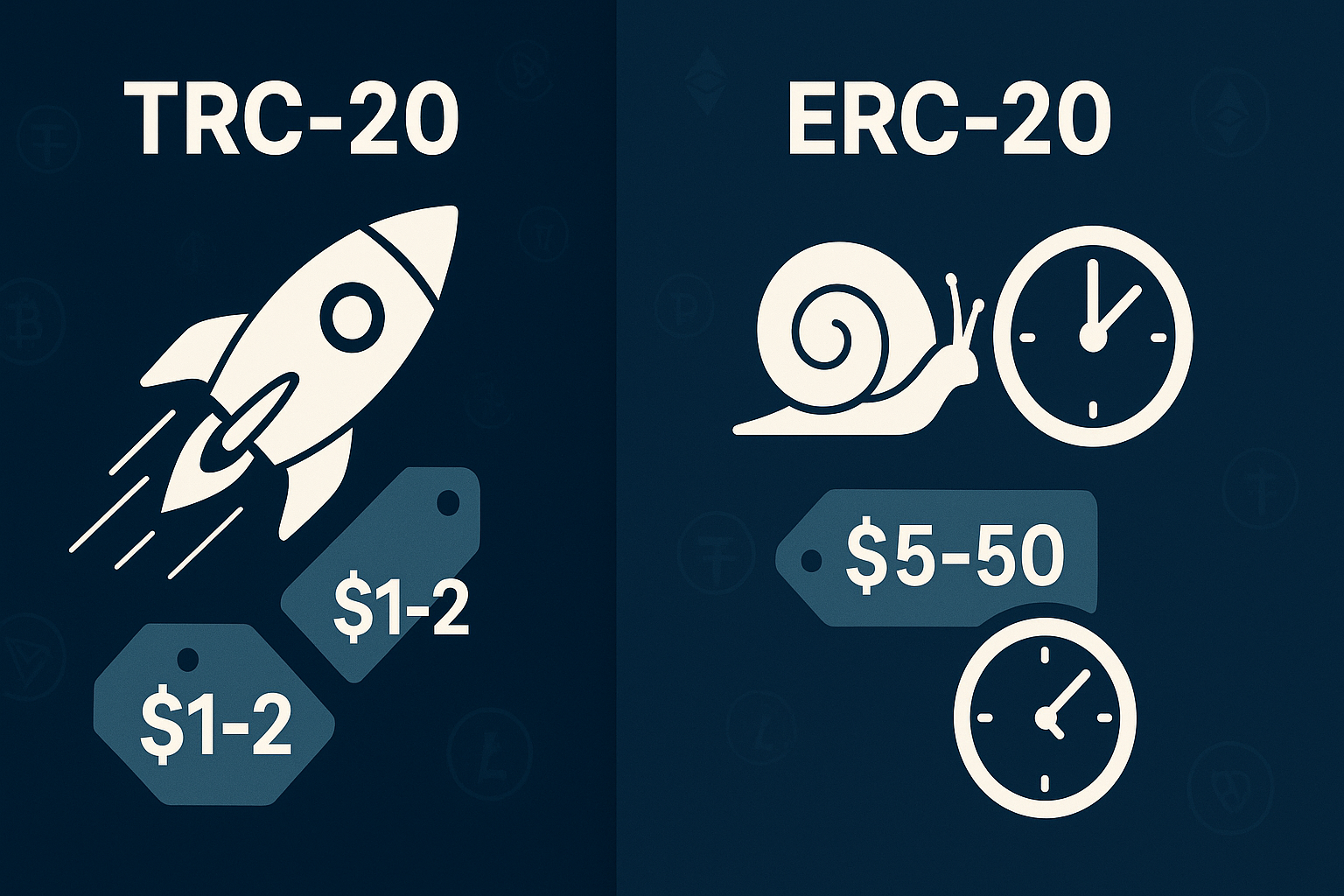
Stablecoins, especially USDT, have become essential for international transfers and crypto payments. However, choosing the right network for USDT is crucial — it affects fees, speed, and accessibility.
TRC-20 (Tron) vs ERC-20 (Ethereum): Key Differences
Fees
- TRC-20: transfer fee is typically 1–2 USDT, regardless of amount.
- ERC-20: fees can range from 5 to 50 USDT or more, depending on Ethereum network congestion.
Speed
- TRC-20: transfers complete in seconds; Tron processes up to 2000 transactions per second.
- ERC-20: confirmation time can range from minutes to hours during peak load.
Availability
- TRC-20: supported by most exchanges and wallets, including Binance, Bybit, Trust Wallet.
- ERC-20: also widely supported, but requires ETH for gas fees.
Practical Value for VirtCardPay Users
When topping up a virtual card with USDT via VirtCardPay, we recommend choosing the TRC-20 network. This allows you to:
- Minimize fees (especially for small amounts).
- Receive funds within seconds.
- Avoid needing ETH in your wallet for gas.
Important: always verify that the recipient supports the chosen network. Sending USDT on a network not supported by the wallet can result in loss of funds.
VirtCardPay's Take
For everyday USDT transfers, TRC-20 is the optimal choice in terms of speed and cost. ERC-20 is only justified when integrating with Ethereum DeFi protocols or handling large sums where fees are negligible.
Disclaimer: This material is for informational purposes only and does not constitute financial advice. Cryptocurrencies are subject to high volatility. Always conduct your own research before making transactions.
Payment guides
- How to Pay for Foreign Digital Services with a USDT-Funded Card
- How to Top Up a Virtual Card via USDT: Step-by-Step
- How to Withdraw Funds from Your Card Back to USDT
A virtual card in 2 minutes
Pay for subscriptions, AI tools, travel, and international stores. Top up with USDT or TON.