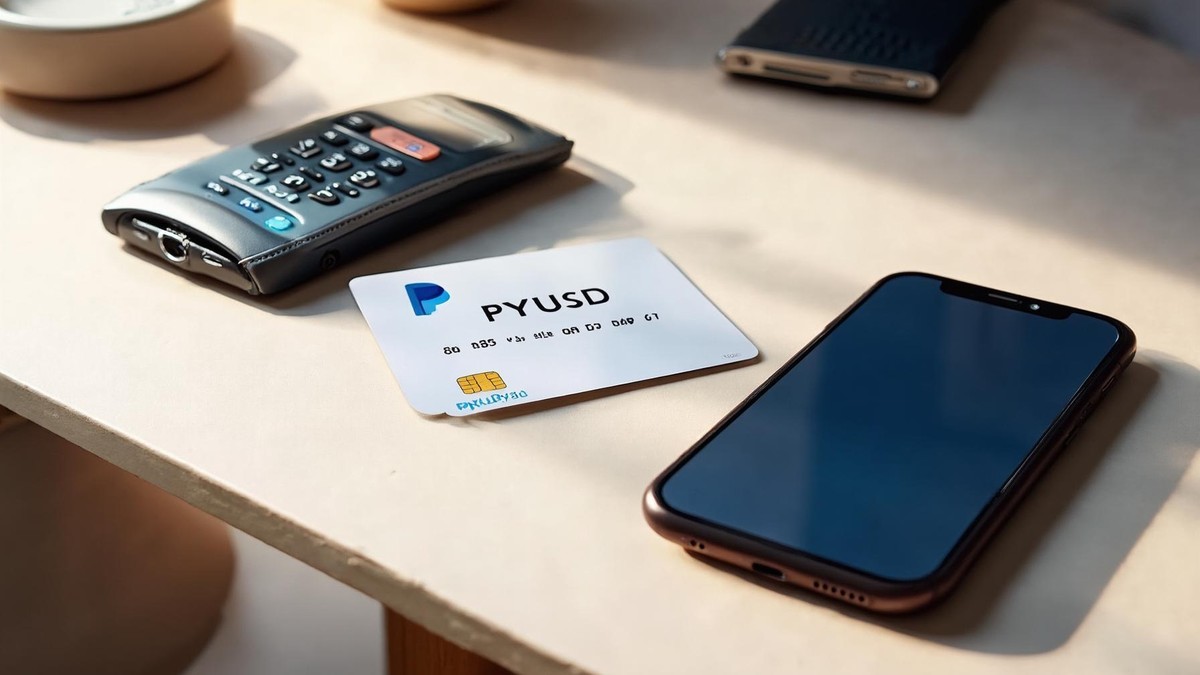
In August 2023, PayPal announced the launch of its stablecoin – PayPal USD (PYUSD). This is the first time a major payment service has entered the crypto stablecoin market. As of 2026, PYUSD's market capitalization is around $700 million (for comparison: USDT – $130 billion, USDC – $45 billion). In terms of volume, it is a tiny player. In terms of potential, it is interesting.
Who is the issuer
PYUSD is issued by Paxos Trust Company – a regulated trust company licensed in New York (NYDFS). This is the same company that previously issued Binance's BUSD (discontinued at the SEC's request in 2023). Technologically, PYUSD exists on Ethereum (ERC-20) and Solana.
What makes it interesting
Integration with PayPal. PayPal users in the US can convert USD balances to PYUSD and back directly in the app, without a separate crypto exchange. You can send PYUSD to any Ethereum wallet. This lowers the barrier to entry into crypto for millions of ordinary users.
Regulatory track record. The issuer fully complies with US requirements, reserves are audited monthly by WithumSmith+Brown – public reports are available. This gives corporate clients confidence that USDT does not provide.
Yield for holders. Since 2024, PayPal offers about 3.7% APY to PYUSD holders in their PayPal wallet. This is rare – most stablecoins do not pay holders.
What is missing
Accessibility. PYUSD is directly available only to PayPal users in the US. In the EU, CIS, Asia – it is formally available through crypto exchanges, but liquidity is low. Most trading pairs on major exchanges are still with USDT.
Network support. ERC-20 and Solana – that's it. No TRC-20 (even though this network is popular outside the US), no BEP-20.
Scenario where PYUSD takes off
If PayPal integrates PYUSD into its core payment products (Braintree for acquiring, Venmo for peer-to-peer transfers) – that could potentially reach 400+ million users in dozens of countries, making it easier for them to use stablecoins. As of 2026, such integration is still limited.
What this means for the user
For payments and transactions – continue using USDT/USDC. For long-term holding, PYUSD is no worse than USDC in terms of regulation and currently better in terms of yield. But a full ecosystem shift to PYUSD will take years, if it happens at all.
A virtual card in 2 minutes
Pay for subscriptions, AI tools, travel, and international stores. Top up via USDT-TRC20 with no acquiring fees.